More Than Riding Horses—A Journey of Hope, Partnership, and Possibility
“Sometimes the most important journey doesn’t begin when a rider climbs into the saddle.”
“It begins the moment they realize they belong.”
There is a quiet rhythm to a horse stable.
Long before a lesson begins, someone is filling water buckets.
Someone is brushing a dusty coat until it shines in the morning light.
A volunteer is fastening a helmet.
An instructor is checking tack one more time.
A horse is standing patiently, waiting for the next person they will meet.
It looks ordinary.
And in many ways, it is.
But ordinary moments have a remarkable way of becoming unforgettable.
Somewhere nearby, a family is arriving for the very first time.
Their child may be excited.
Or nervous.
Or unsure of what to expect.
The parents may have spent weeks—or years—searching for something that feels like the right fit. They’ve filled out paperwork, driven to appointments, celebrated victories that others might overlook, and carried questions that rarely have simple answers.
Today, they’re simply hoping.
The horses don’t know any of that.
They don’t know diagnoses.
They don’t know test scores.
They don’t know labels.
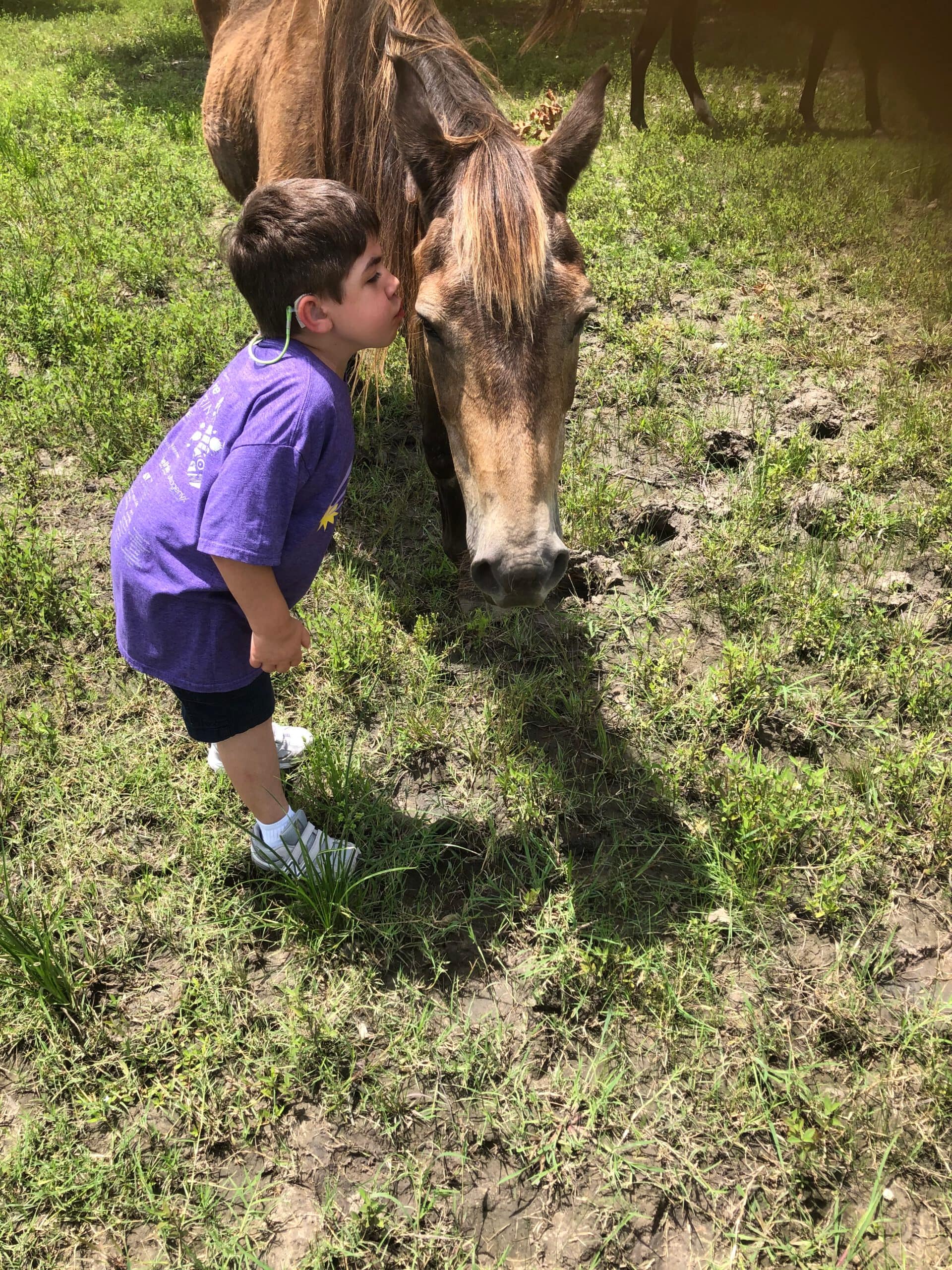
They simply notice the person standing in front of them.
And perhaps that’s where adaptive riding begins.
Not with a horse.
Not with a lesson plan.
But with a relationship.
One built on patience, trust, and the quiet understanding that every journey starts exactly where someone is.
More Than Learning to Ride
If you’ve never experienced adaptive riding before, it’s easy to assume it’s simply horseback riding adapted for individuals with disabilities.
In one sense, that’s true.
Lessons are thoughtfully designed to meet each rider’s unique abilities, goals, and needs.
But ask almost any family who has spent time around an adaptive riding program, and they’ll tell you something else begins to happen.
Confidence grows.
Responsibilities are shared.
Friendships form.
New skills emerge.
Small victories become milestones worth celebrating.
For many riders, learning to guide a horse is only part of the story.
The greater journey is discovering what they’re capable of.
Not all at once.
One lesson.
One challenge.
One success at a time.
The Quiet Teachers
People often ask what makes horses so special.
It’s a difficult question to answer because anyone who loves horses knows the answer isn’t found in a textbook.
Horses don’t care what title someone has.
They don’t compare one rider to another.
They don’t ask what happened yesterday.
They simply respond to what is happening right now.
To patience.
To consistency.
To kindness.
To confidence.
And sometimes…
To the courage it takes to try again.
Every horse has a different personality.
Some are playful.
Some are steady.
Some seem to know exactly when a rider needs a little extra patience.
They become partners.
Teachers.
Trusted friends.
Not because they’ve been trained to perform magic.
But because relationships built on trust have a way of changing us.
What Parents Often Discover
Many parents arrive hoping their child will enjoy being around horses.
It’s a wonderful place to begin.
But for many families, something unexpected unfolds.
A rider who hesitated to speak begins giving directions to a horse.
A child who doubted themselves beams with pride after mastering a new skill.
A parent watching from outside the arena smiles through tears—not because every challenge has disappeared, but because they’ve witnessed something deeply meaningful.
They’ve seen possibility.
Adaptive riding doesn’t erase life’s difficulties.
It doesn’t promise that every obstacle will disappear.
What it can offer is something equally valuable:
A place where growth is celebrated.
Where effort matters.
Where every rider is welcomed with dignity and respect.
Where progress is measured against yesterday—not against someone else’s journey.
Sometimes that changes far more than anyone expected.
It Takes a Community
Before every lesson, countless small acts make that moment possible.
Someone fed the horses before sunrise.
Someone cleaned tack.
Someone repaired a gate.
Someone donated so a horse could receive veterinary care.
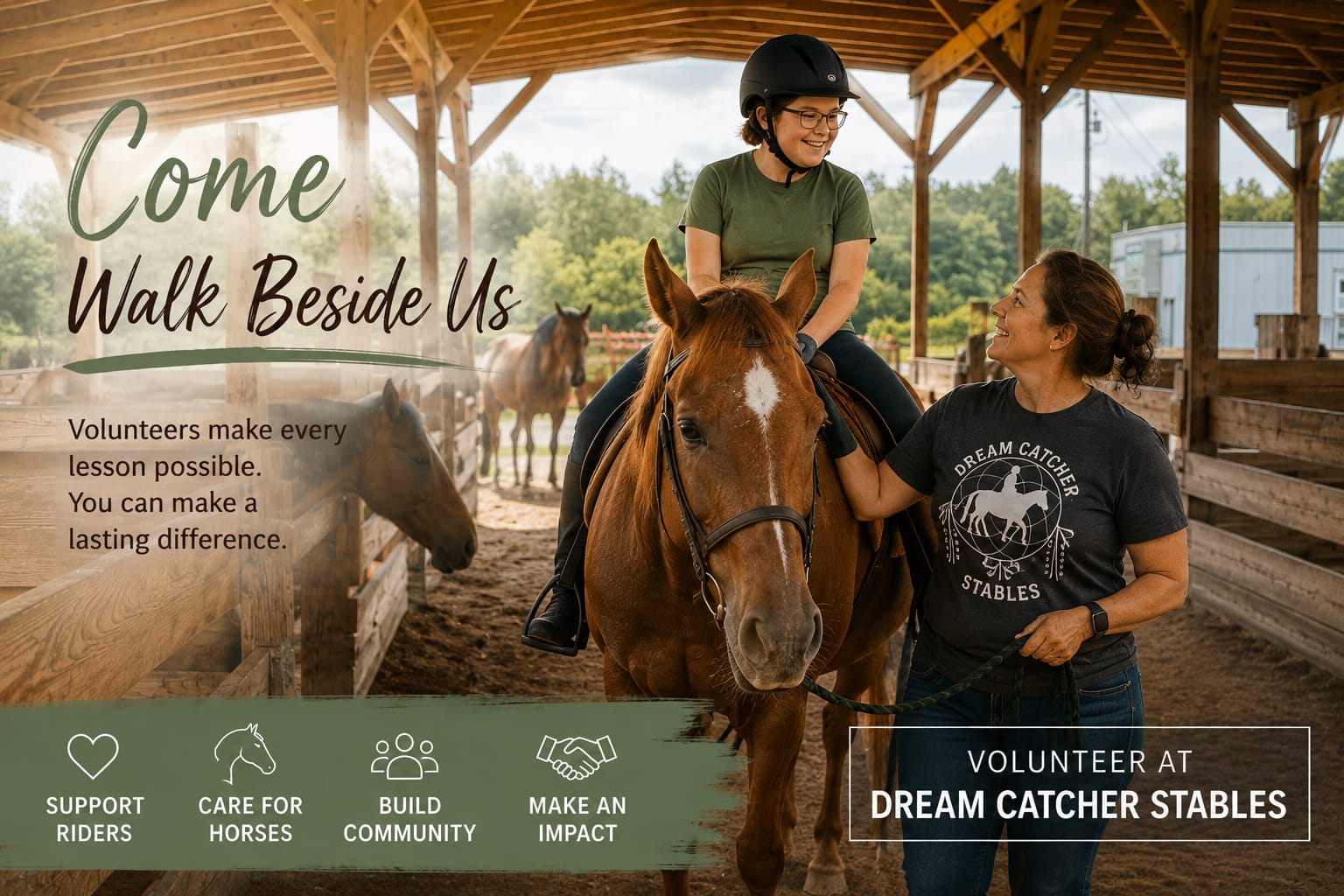
Someone volunteered their afternoon.
Someone believed this mission was worth supporting.
Adaptive riding has never been about one person.
It has always been about a community choosing to build something together.
The horses need people.
The riders need horses.
The volunteers need purpose.
Families need hope.
Each one strengthens the other.
That is how places like Dream Catcher grow—not through grand gestures, but through hundreds of quiet acts of generosity that, together, become something extraordinary.
The Dream We Share
At Dream Catcher Stables, we believe every person deserves the opportunity to experience the connection between horses and people.
We believe every rider deserves to be treated with dignity.
We believe every horse deserves compassionate, thoughtful care.
We believe every volunteer, donor, instructor, family, and community member becomes part of a story much larger than themselves.
We’re not inviting you to admire what Dream Catcher is.
We’re inviting you to help build what Dream Catcher can become.
Because the future of this place has never depended on one person.
It has always depended on a community that believes hope is worth investing in.
One rider.
One volunteer.
One horse.
One act of kindness at a time.
Your Journey Starts Here
Maybe you’re searching for a program for someone you love.
Maybe you’re looking for a meaningful place to volunteer.
Maybe horses have always held a special place in your heart.
Or maybe you simply believe that every person deserves the chance to discover their own strength.
Whatever brought you here…
Welcome.
We hope you’ll explore our programs, meet our remarkable herd, and discover the many ways you can become part of the Dream Catcher story.
Because the most meaningful journeys rarely happen alone.
They happen when people—and horses—walk forward together.
Still Wondering?
A few questions families often ask before their first visit.
What is adaptive riding?
Adaptive riding is horseback riding instruction that is tailored to meet the individual needs of people with physical, cognitive, emotional, or developmental disabilities. Lessons focus on horsemanship, riding skills, confidence, and building meaningful relationships with horses in a supportive environment.
Is adaptive riding the same as therapeutic riding?
Often, yes. The terms are frequently used interchangeably. Today, many organizations use adaptive riding because it better reflects individualized riding instruction while distinguishing it from licensed medical therapies. You’ll still hear therapeutic riding used by many families and organizations.
Who can participate in adaptive riding?
Adaptive riding is designed for children, teens, and adults with a wide variety of physical, cognitive, emotional, and developmental disabilities. Every rider is unique, and programs are designed to meet individual goals and abilities.
Does my child need previous horse experience?
Not at all.
Many riders meet a horse for the very first time during their first lesson. Our instructors and volunteers guide riders through each step at a pace that feels comfortable and encouraging.
What happens during the first lesson?
Your first visit is an opportunity to become familiar with the horses, instructors, volunteers, and riding environment. Depending on the rider’s needs, the first lesson may include grooming, learning about horse safety, mounting with assistance if needed, and spending time getting comfortable around the horse before beginning riding activities.
What should my child wear?
Comfortable clothing that allows for movement is best. Riders should wear long pants and closed-toe shoes or boots with a small heel if possible. Specific recommendations will be provided before your first lesson.
Is adaptive riding safe?
Safety is always a priority. Lessons are designed with each rider’s abilities in mind, and trained instructors, volunteers, and carefully selected horses work together to create a supportive environment. As with any activity involving horses, there are inherent risks, but every effort is made to minimize them through proper instruction, equipment, and supervision.
What disabilities can adaptive riding support?
Adaptive riding serves individuals with many different diagnoses and abilities. Programs may benefit riders with physical disabilities, autism spectrum disorder, Down syndrome, cerebral palsy, developmental delays, sensory processing differences, traumatic brain injuries, and many other conditions. Every rider’s experience is unique.
What are the benefits of adaptive riding?
While every rider’s journey is different, families often report improvements in confidence, balance, coordination, communication, independence, focus, and self-esteem. Just as important are the relationships riders build with horses, volunteers, instructors, and one another.
Why are horses so effective?
Horses respond honestly and consistently. They don’t judge, compare, or expect perfection. They teach patience, communication, responsibility, and trust in ways that are difficult to replicate anywhere else. For many riders, the partnership with a horse becomes one of the most meaningful parts of their journey.
Can parents watch lessons?
Yes! Parents and caregivers are an important part of each rider’s journey. We encourage families to ask questions, celebrate milestones, and become part of the Dream Catcher community.
How can I volunteer if I don’t know anything about horses?
You don’t have to be an experienced horse person to make a difference. Many volunteers begin with little or no horse experience. Training is provided, and there are many ways to support riders, horses, and the program.
How are the horses selected?
Not every horse is suited for adaptive riding. Lesson horses are chosen for their temperament, soundness, patience, and willingness to work with a variety of riders. Each horse has a unique personality and plays an important role in the program.
How can I support Dream Catcher Stables?
There are many ways to help. You can volunteer, donate, sponsor a horse, share our mission with others, or simply help introduce a family to adaptive riding. Every act of support helps create opportunities for riders and ensures the horses receive the care they deserve.
How do I get started?
The first step is reaching out. We’d love to answer your questions, learn about your rider, and help determine whether Dream Catcher Stables is the right fit for your family. Contact us or complete our interest form to begin your journey.